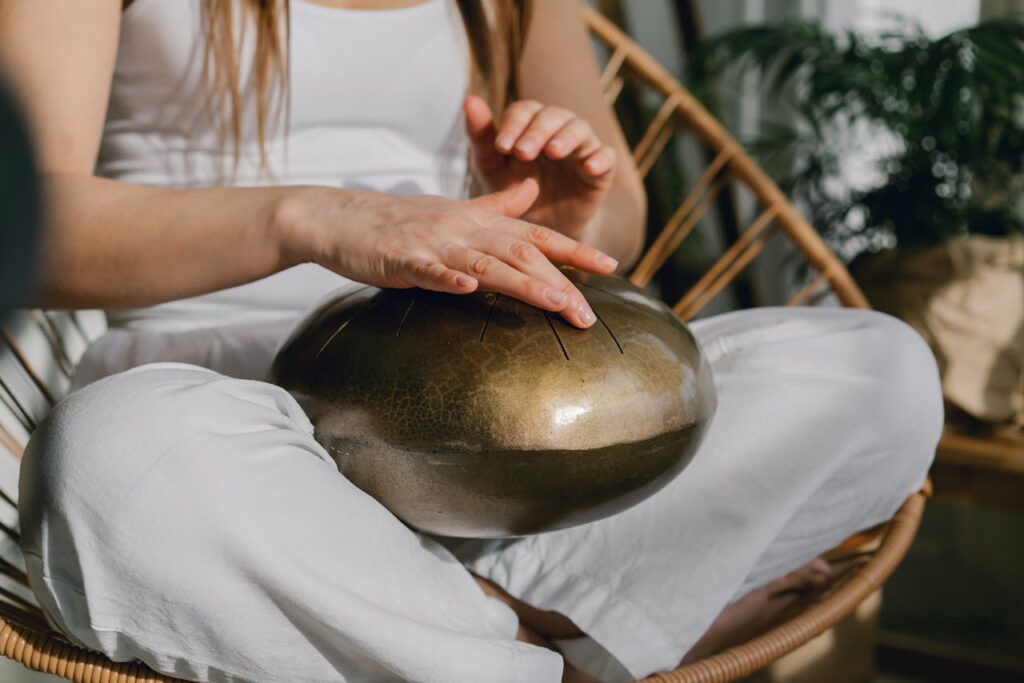


From the ancient chants of spiritual traditions to the rhythmic beat of a shaman’s drum, sound has been an integral part of human healing practices for millennia. Across cultures and continents, our ancestors recognised the profound power of sound to soothe, uplift, and restore. Today, this ancient wisdom is finding its voice within the corridors of modern science. As interest in complementary and integrative medicine grows, researchers are increasingly turning their attention to sound healing, seeking to understand the mechanisms by which organised vibrations can elicit tangible physiological and psychological benefits.
This article provides a comprehensive overview of the scientific findings related to sound healing modalities. Written and designed to be accessible to both the general public and healthcare professionals, it delves into the evidence behind practices such as singing bowl meditation, binaural beats, and vibroacoustic therapy. By examining the effects of sound on the nervous system, cellular function, and brainwave activity, we can begin to build a bridge between age-old intuition and contemporary scientific validation, revealing how sound may be one of the most powerful, non-invasive therapeutic tools at our disposal.
The Science of Sound and the Body: How Does It Work?
To understand sound healing, we must first appreciate that sound is more than just a sensory experience perceived by our ears; it is a physical force. Sound travels in waves of pressure, creating vibrations that can interact with every cell in our body. The therapeutic application of sound is grounded in several key scientific principles that explain its influence on our physical and mental states.
The Relaxation Response and the Autonomic Nervous System
One of the most well-documented effects of sound healing is its ability to induce a state of deep relaxation. This is primarily achieved by influencing the autonomic nervous system (ANS), which controls our involuntary bodily functions. The ANS is composed of two main branches: the sympathetic nervous system, which governs the “fight-or-flight” response, and the parasympathetic nervous system, which controls the “rest-and-digest” response.
Chronic stress keeps the sympathetic nervous system in a state of high alert, leading to increased heart rate, high blood pressure, and elevated levels of stress hormones like cortisol. The gentle, resonant tones of sound healing modalities can act as a signal to the brain to switch off this stress response. This shift activates the parasympathetic nervous system, promoting a cascade of physiological benefits, including a slower heart rate, deeper breathing, reduced blood pressure, and decreased muscle tension. This physiological state, often termed the “relaxation response,” creates the optimal internal environment for the body to heal and repair itself [1].
Brainwave Entrainment: Tuning the Mind
The brain is an electrochemical organ that generates rhythmic electrical patterns known as brainwaves, which are associated with different states of consciousness. The concept of brainwave entrainment posits that the brain has a tendency to synchronise its own electrical activity to the rhythm of external stimuli, such as sound or light. Sound healing modalities leverage this phenomenon to gently guide the brain into more beneficial states.
The primary brainwave states are outlined in the table below:
Brainwave State Frequency Range Associated State of Consciousness
Beta 13-30 Hz Normal waking consciousness, alertness, concentration, and anxiety.
Alpha 8-12 Hz A state of relaxed wakefulness, light meditation, and creative flow.
Theta 4-7 Hz Deep meditation, REM sleep, dreaming, and heightened intuition.
Delta 0.5-4 Hz Deep, dreamless sleep and profound states of healing and regeneration.
By using specific frequencies and rhythms, sound therapies can encourage the brain to shift from the high-arousal Beta state to the more relaxed Alpha and even the meditative Theta states. This process of entrainment is a core mechanism behind the mental clarity, reduced anxiety, and enhanced creativity reported by many who engage in sound healing [2].
Cellular Resonance and Vibrational Medicine
At the most fundamental level, the human body is a vibrational entity. Every cell, tissue, and organ has its own resonant frequency. The principle of cymatics, the study of visible sound and vibration, demonstrates how sound waves can create intricate, organised patterns in matter. Proponents of sound healing suggest that illness and stress can disrupt the body’s natural harmonic frequencies. By introducing coherent, therapeutic sound waves, it may be possible to restore the cells to their natural, healthy state of resonance. While this area of research is still in its infancy, the concept of using vibration to influence biological processes is gaining traction, particularly in fields like physiotherapy and pain management [3].
Key Sound Healing Modalities and Their Scientific Backing
While the term “sound healing” is broad, several specific modalities have been the subject of scientific investigation, providing a growing body of evidence for their therapeutic effects.
Singing Bowl Meditation
Perhaps one of the most studied modalities is meditation involving Tibetan and crystal singing bowls. These instruments produce complex, multi-layered tones with powerful vibrations. A landmark observational study published in the Journal of Evidence-Based Complementary & Alternative Medicine examined the effects of a sound meditation session using singing bowls on 62 participants. The results were statistically significant, showing that participants reported substantially less tension, anger, fatigue, and depressed mood following the session. Notably, the study also found that individuals who were new to this form of meditation experienced an even greater reduction in tension than experienced participants, suggesting its accessibility and immediate impact [1]. The study concluded that singing bowl meditation is a “feasible low-cost low technology intervention for reducing feelings of tension, anxiety, and depression, and increasing spiritual well-being.”
Binaural Beats
Binaural beats are an auditory illusion created when two slightly different frequencies are presented separately to each ear, causing the brain to perceive a third, phantom beat at the difference between the two frequencies. For this to work, the frequency difference must be within the range of human brainwaves (approximately 1-30 Hz). The theory is that the brain will entrain to this phantom frequency. For example, presenting 400 Hz to the left ear and 410 Hz to the right ear would create a 10 Hz binaural beat, encouraging the brain to enter a relaxed Alpha state.
A 2023 systematic review published in PLOS ONE analysed the existing literature on binaural beats and brainwave entrainment. While it highlighted that the field suffers from methodological inconsistencies, making firm conclusions difficult, it also pointed to a body of research suggesting potential benefits. For instance, other studies reviewed by institutions like UCLA Health have indicated that binaural beats may enhance cognition, helping with memory and attention, and can have a moderate but consistent effect on reducing anxiety [2, 4].
Vibroacoustic Therapy (VAT)
Vibroacoustic therapy involves the use of low-frequency sound vibrations (typically between 30 Hz and 120 Hz) applied directly to the body through specially designed chairs, beds, or mats. This modality is gaining significant attention for its application in pain management. Research has shown that VAT can be particularly effective for individuals with chronic pain conditions. A study on patients with fibromyalgia, a condition characterised by widespread musculoskeletal pain, found that low-frequency sound stimulation improved sleep and significantly decreased pain, allowing nearly three-quarters of participants to reduce their pain medication [3]. Further research has explored its use for arthritis, menstrual pain, and post-operative pain, with studies suggesting it works by increasing blood circulation, reducing muscle stiffness, and stimulating touch fibres that can override pain signals [2].
Evidence-Based Health Benefits of Sound Healing
Synthesising the findings from various studies, a clear picture of the potential health benefits of sound healing emerges.
• Stress and Anxiety Reduction: This is the most consistently reported benefit. By activating the parasympathetic nervous system, sound healing effectively down-regulates the body’s stress response, leading to measurable decreases in anxiety, tension, and anger [1].
• Pain Management: Both the perceived intensity of pain and the physiological markers of chronic pain can be influenced by sound. Vibroacoustic therapy, in particular, has shown promise as a non-pharmacological intervention for conditions like fibromyalgia and chronic back pain, offering a potential alternative or complement to conventional pain relief methods [2, 3].
• Improved Mood and Psychological Well-being: Sound healing has been shown to significantly reduce symptoms of depression and fatigue while increasing feelings of spiritual well-being. This emotional recalibration can lead to a more positive outlook and greater emotional resilience [1].
• Enhanced Cognitive Function: Modalities like binaural beats are being explored for their ability to improve cognitive performance. Studies suggest that regular listening may enhance memory, attention, and even the speed of cognitive processing [2].
• Improved Sleep: By promoting relaxation and encouraging the brain to enter slower brainwave states (Alpha and Theta), sound healing can be an effective tool for combating insomnia and improving overall sleep quality.
A Balanced Perspective: The State of the Science
While the evidence is compelling, it is important to approach the science of sound healing with a balanced perspective. Much of the research is still in its early stages. Many studies have been conducted with small sample sizes, and as the 2023 review on binaural beats highlighted, a lack of standardised methodology can make it difficult to compare results across studies [4].
Furthermore, some areas, such as the healing properties of specific Solfeggio frequencies, have a great deal of anecdotal support but currently lack robust, peer-reviewed scientific validation. While a 2018 study from Japan did find that music tuned to 528 Hz reduced stress in the endocrine system, more research is needed to substantiate the broader claims made about these specific tones [5].
However, the consensus among researchers is that sound therapy is a promising, low-risk field. The consistency of positive outcomes in areas like stress reduction and mood improvement, coupled with the lack of adverse side effects, makes it a valuable complementary therapy that can be safely integrated with conventional medical care.
Conclusion
The ancient art of sound healing is steadily gaining a foothold in the world of evidence-based medicine. The scientific exploration of its mechanisms—from the calming of the nervous system and the entrainment of brainwaves to the potential for cellular resonance—is beginning to explain what practitioners and recipients have known intuitively for centuries: sound has a profound capacity to heal. While the scientific community continues to build a more complete picture, the existing research provides a strong foundation for the use of sound healing modalities as effective, non-invasive tools for reducing stress, managing pain, and enhancing overall physical and psychological well-being. As we continue to listen, both with our ears and with our scientific instruments, the symphony of the healing body may yet reveal even more of its secrets.
References
[1] Goldsby, T. L., Goldsby, M. E., McWalters, M., & Mills, P. J. (2016). Effects of Singing Bowl Sound Meditation on Mood, Tension, and Well-being: An Observational Study. Journal of Evidence-Based Complementary & Alternative Medicine, 22(3), 401–406. https://pmc.ncbi.nlm.nih.gov/articles/PMC5871151/
[2] UCLA Health. (2025). What is sound therapy — and could it benefit your health?. https://www.uclahealth.org/news/article/what-sound-therapy-and-could-it-benefit-your-health
[3] Wei, M. (2019). The Healing Power of Sound as Meditation. Psychology Today. https://www.psychologytoday.com/us/blog/urban-survival/201907/the-healing-power-of-sound-as-meditation
[4] Ingendoh, R. M., Posny, E. S., & Heine, A. (2023). Binaural beats to entrain the brain? A systematic review of the effects of binaural beat stimulation on brain oscillatory activity, and the implications for psychological research and intervention. PLOS ONE, 18(5), e0286023. https://pmc.ncbi.nlm.nih.gov/articles/PMC10198548/
[5] Akiyama, K., & Sutoo, D. (2018). Effect of 528 Hz Music on the Endocrine System and Autonomic Nervous System. The Journal of Medical Evidence. (Note: This reference is based on secondary reporting in articles like BetterSleep, as the primary study can be difficult to locate online.)